
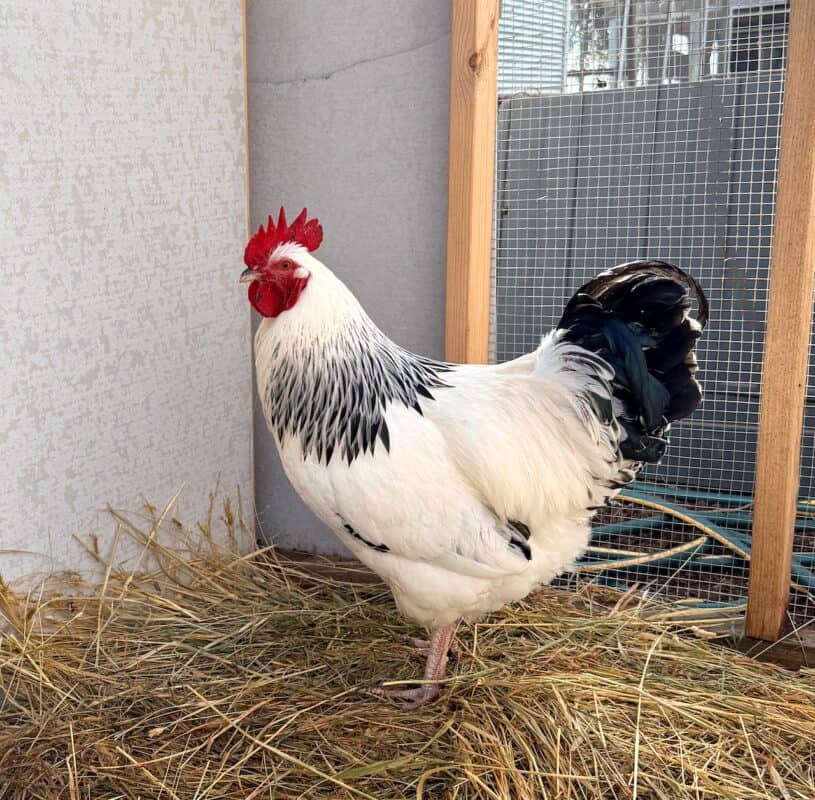
About the Light Sussex
The Sussex is one of Britain’s oldest chicken breeds, named after the county of Sussex and long prized for producing table poultry of superb flavour. Birds of this type were shown at Britain’s first poultry exhibition at London Zoo in 1845, but Victorian crossbreeding with imported Asiatic breeds nearly wiped out the original stock. A revival in 1903, led by the writer Edward Brown and a newly formed breed club, saved the breed and established its standard colours — of which the Light is now the best known.
Traditionally kept as a dual-purpose farm bird, the Sussex was once one of Britain’s principal table breeds before commercial hybrids took over around the Second World War. Today it remains a hugely popular choice for smallholders and backyard keepers, valued equally for its meat and for its steady supply of eggs. The breed is recognised in several colours including Light, Speckled, Red, Brown, Buff, Silver, White and Coronation but the Light, with its clean white-and-black markings, is by far the most familiar.
Physical Features
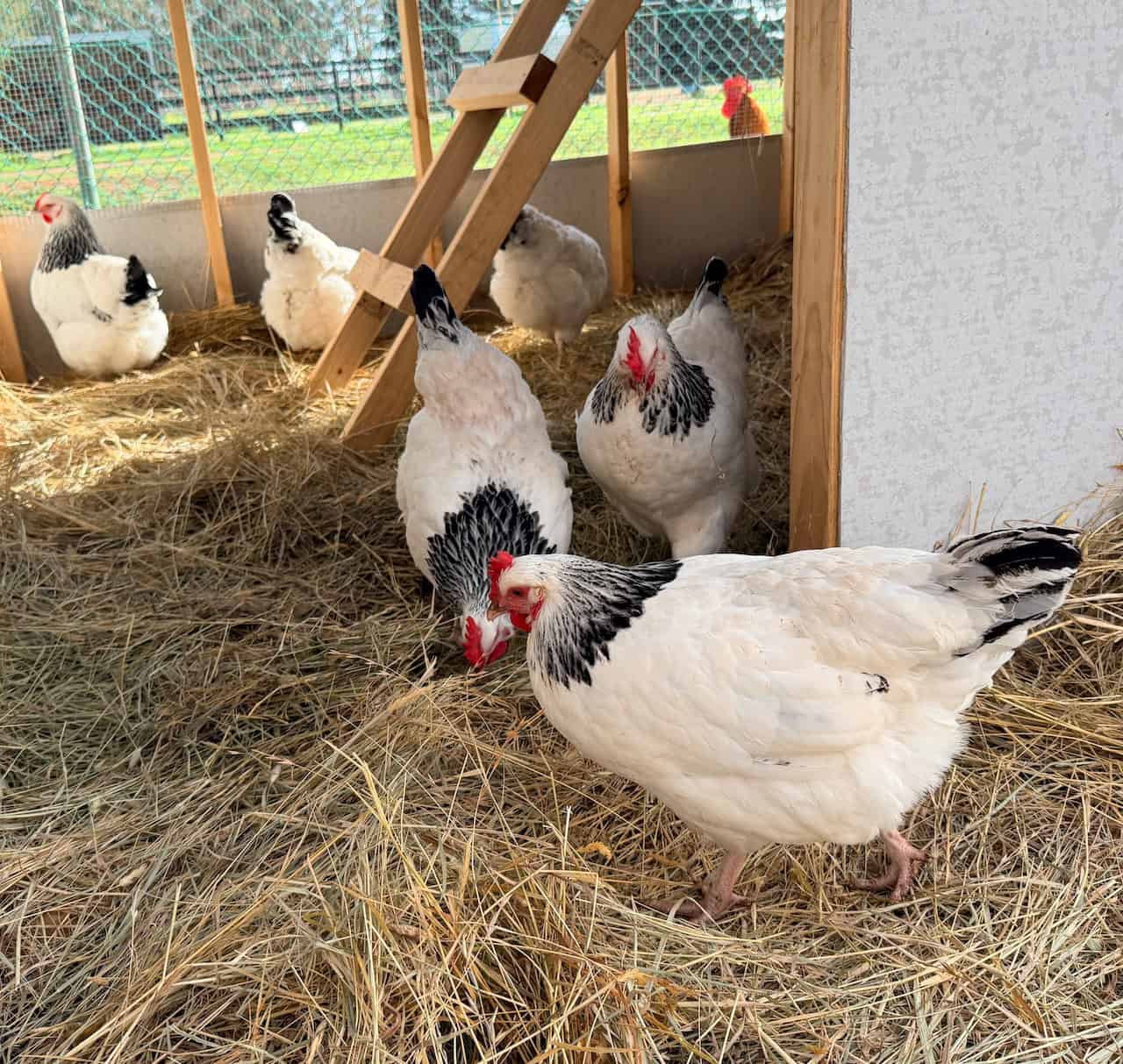
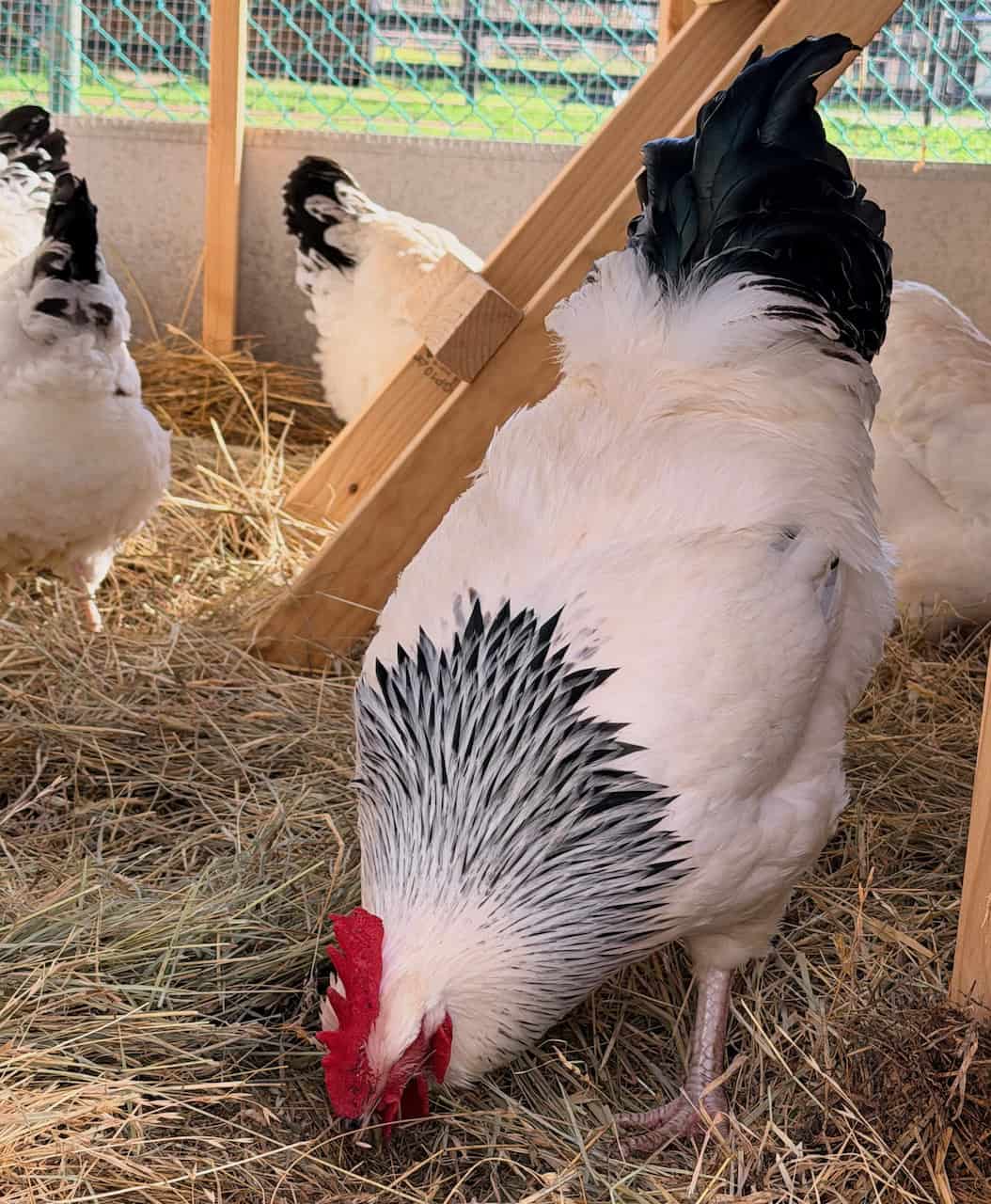
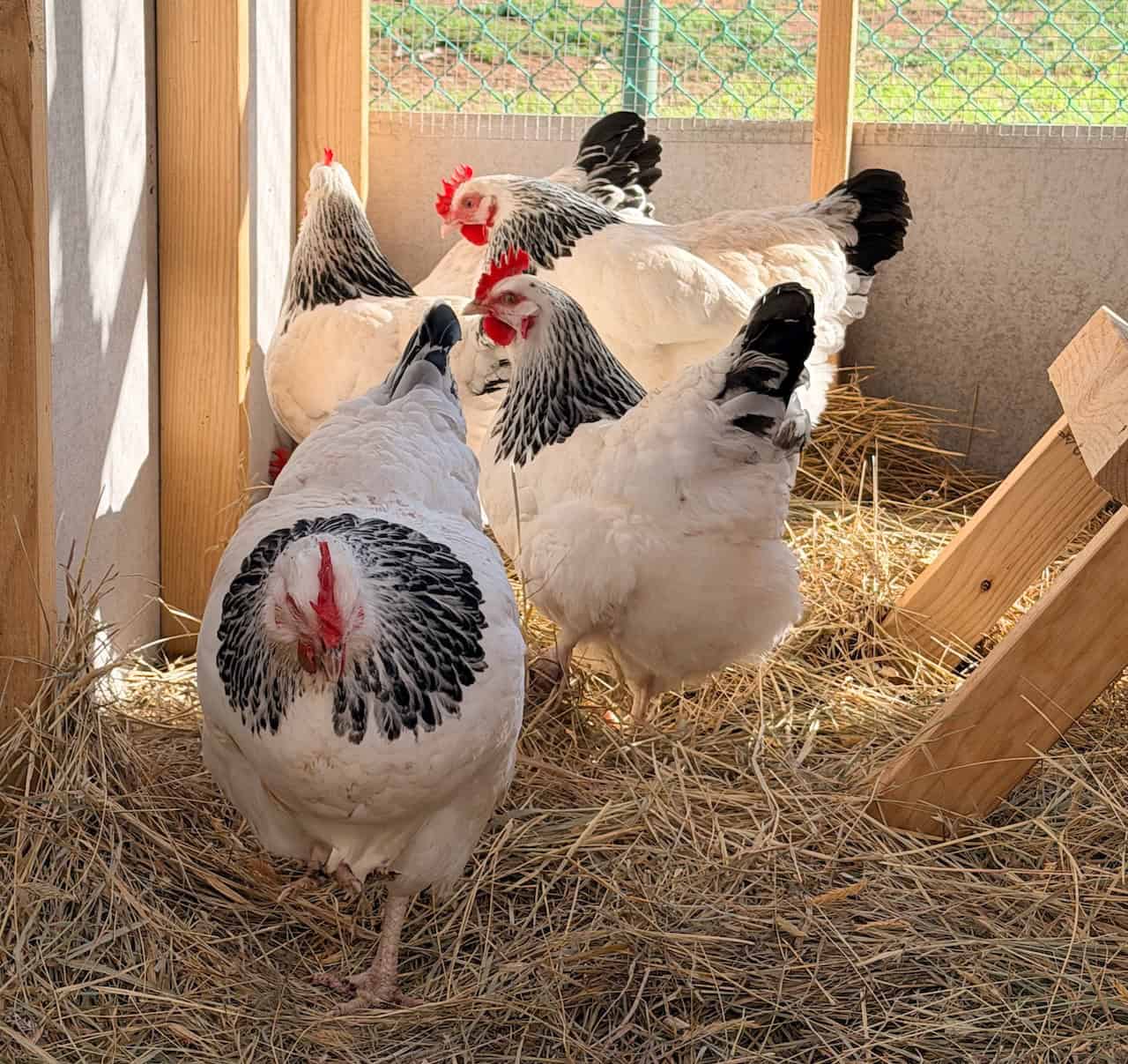
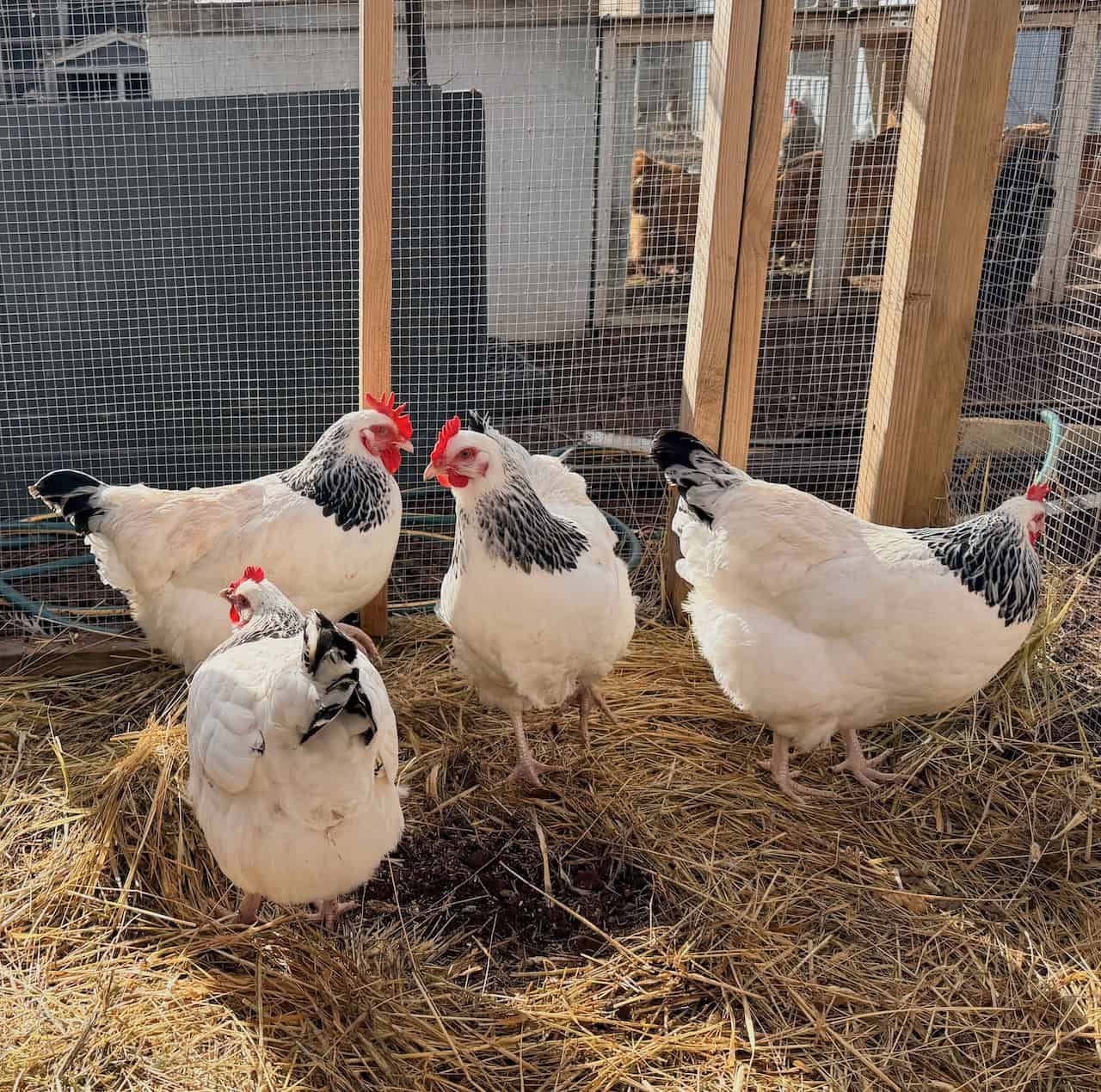
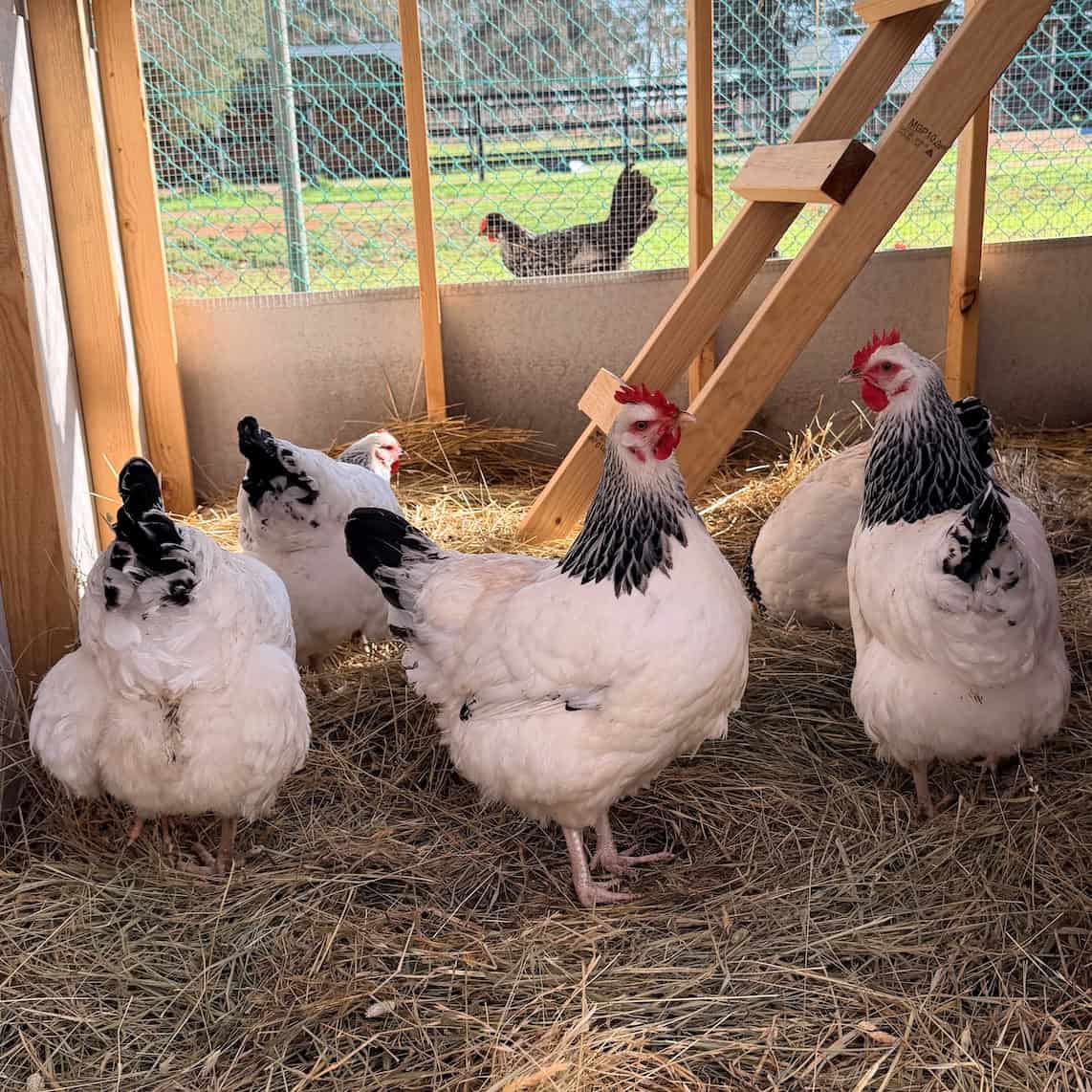
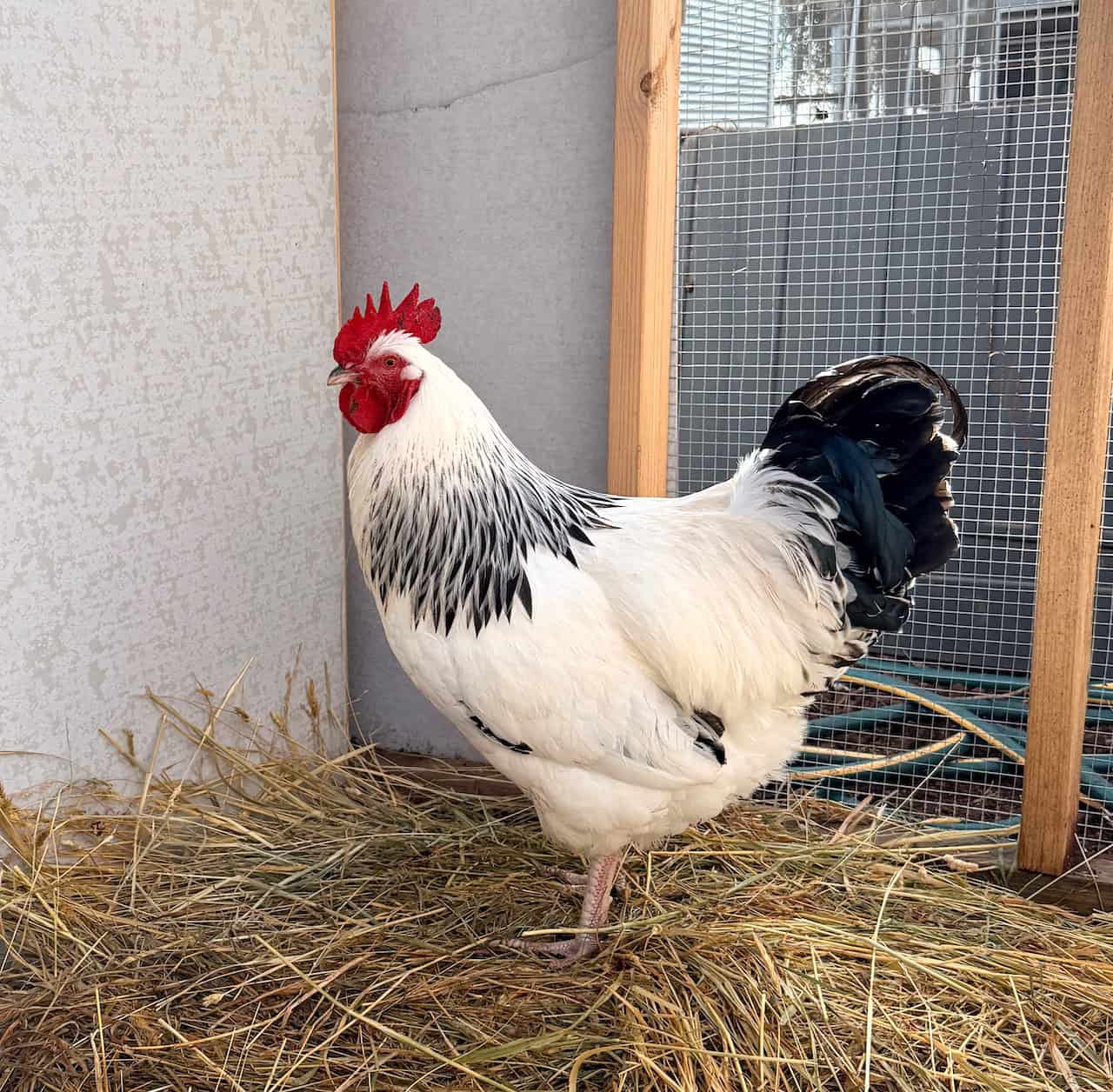
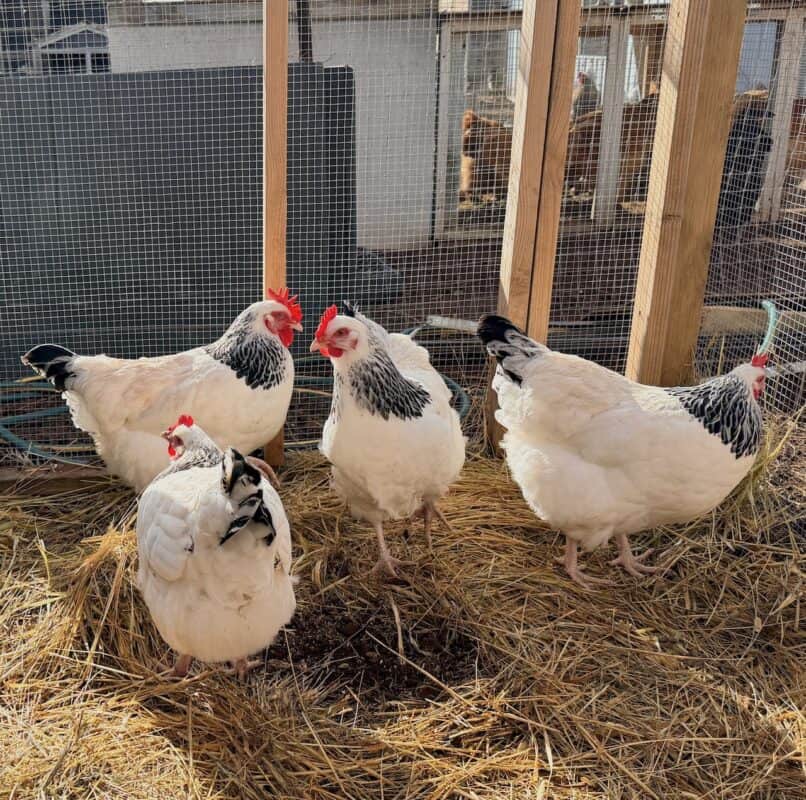
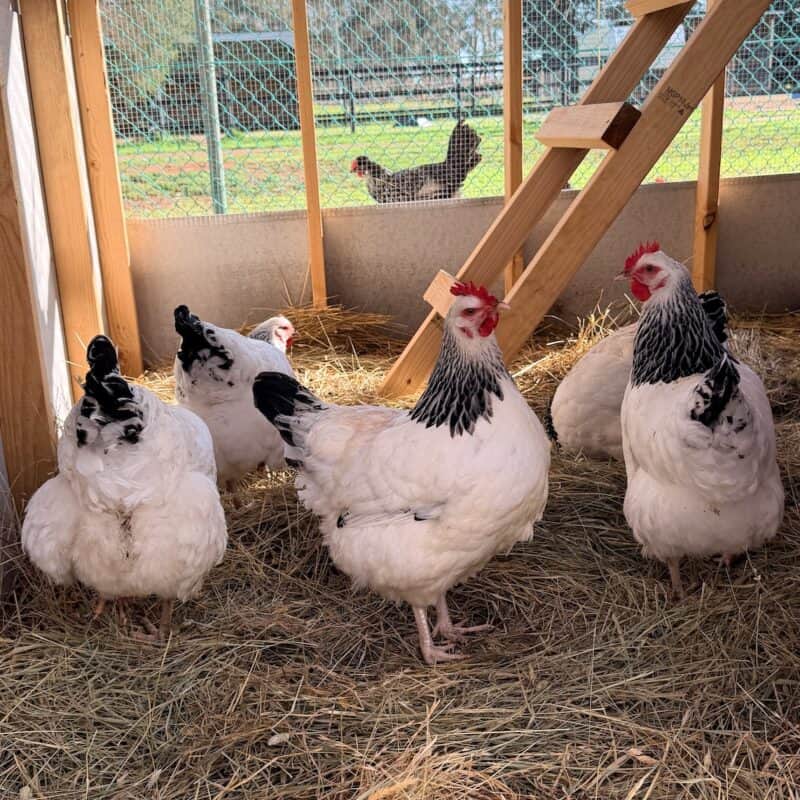
The Light Sussex is a large, handsome dual-purpose bird with a broad, deep, rectangular body, wide shoulders and a long, flat back. It has white skin, white legs and feet with four toes, a single upright red comb, red earlobes and a short tail carried at a jaunty angle. The plumage is close and neat.
In the Light variety the body is clean white, offset by a black tail, black in the wing flights, and a striking white neck hackle boldly striped with black – the classic “columbian” pattern. Cocks weigh around 4.1 kg and hens around 3.2 kg. The breed is also available in a smaller bantam form (which we do not have).
Temperament and Behaviour
The Light Sussex is prized for its calm, friendly and confident nature, which makes it one of the best breeds for families and first-time keepers. Birds are easily tamed, enjoy human company and settle well whether free-ranging or kept in a run.
Being heavy-bodied, they are poor flyers and are easily contained behind a modest fence, unlike lighter, flightier breeds. They are hardy and cope well with cold, wet conditions, remain good foragers, and generally mix peaceably with other breeds in a mixed flock.
Fertile Eggs & Hatching
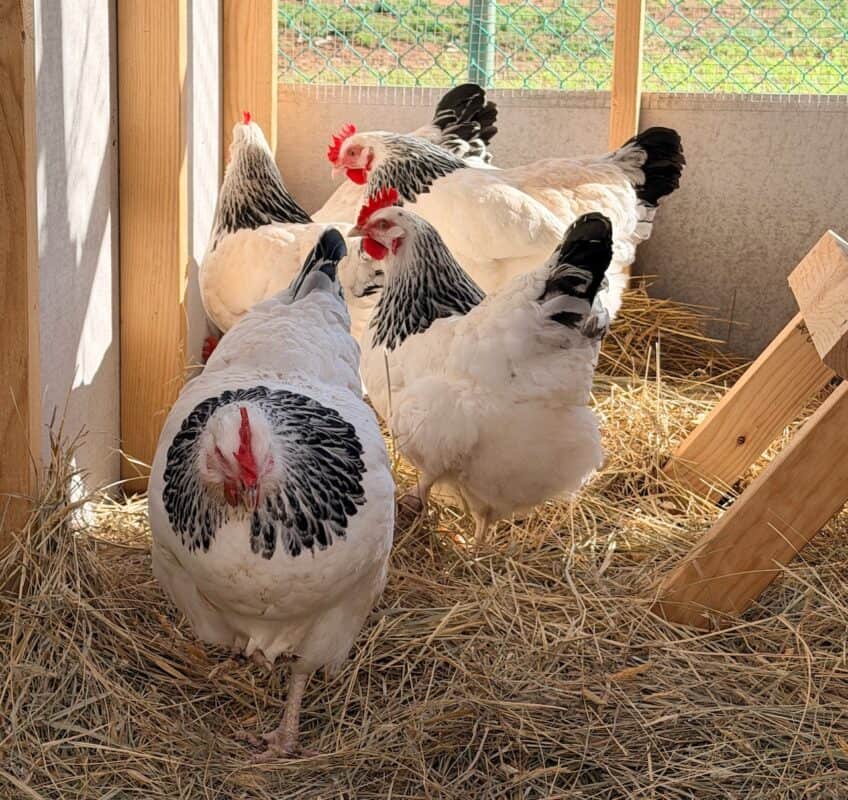
Light Sussex hens are reliable, productive layers, typically producing around 180–250 tinted to light-brown eggs a year, each weighing roughly 60g. They lay steadily through much of the year and many will happily go broody, making excellent, attentive mothers that can raise their own chicks or hatch eggs from other breeds. As a robust, long-established breed the eggs travel and hatch well, and we are happy to package and post fertile eggs around the country, noting that hatch rates are always a little lower for posted eggs.
We are more than happy to safely package and send fertile eggs around the country on the understanding that hatching rates will be lower than locally sourced eggs.
Incubation Settings
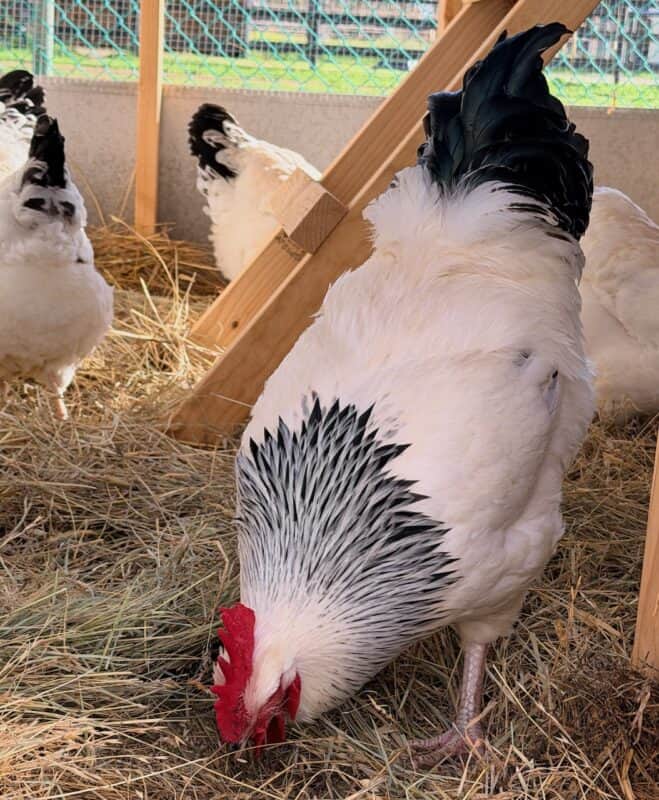
Light Sussex eggs need no special treatment and hatch readily using standard chicken settings. We run our incubators at about 37.5°C with a relative humidity of around 40–45% for the first 18 days. At lockdown on day 18 we stop turning the eggs, lower the temperature very slightly and raise the humidity to roughly 60–65% for the final few days, with chicks hatching on about day 21. As with any breed, exact humidity is best fine-tuned to your own incubator and local conditions by monitoring egg weight loss.
The ‘Dry’ incubation method, where humidity is around 30-35% @ 37.7°C, and at lockdown only the temperature is changed (lowered slightly as normal), is successfully used by many breeders, especially those in higher humidity areas than Victoria.
Buying our Eggs & Birds
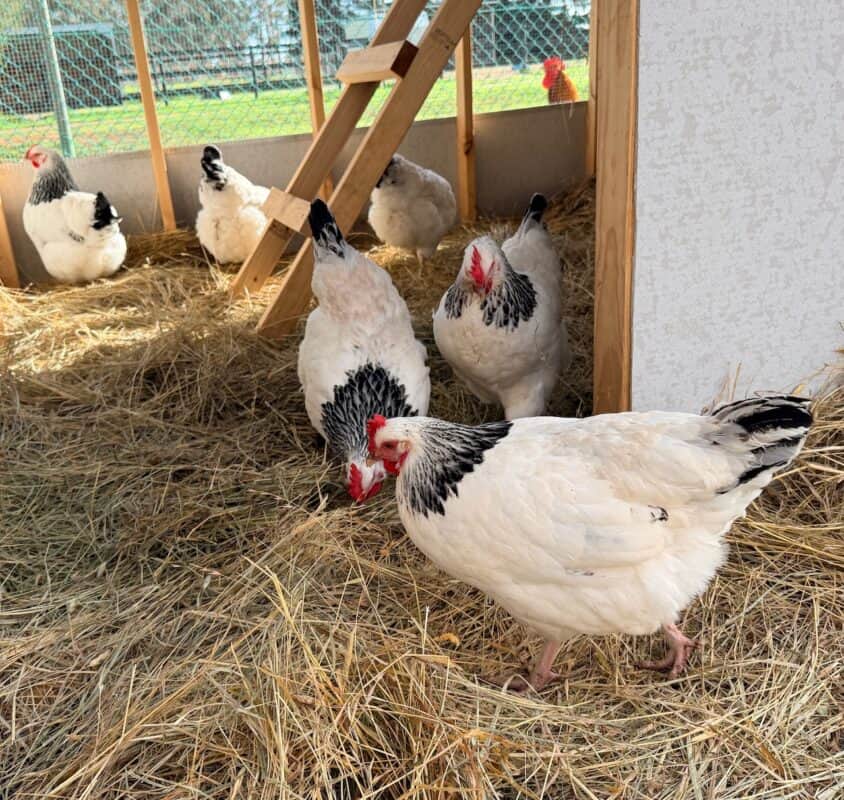
At Tarcombe Farm, we primarily offer fertile eggs and young unsexed chicks for sale. We do from time to time have pullets and cockerels available for sale at the end of the season, once we have selected birds to keep for ourselves for upcoming seasons.
Normally, we hatch to demand, rather than huge numbers, so allow 4 weeks for us to plan and incubate your chicks (from order date).
Please keep in mind that we are not always able to back roosters, so it’s important to have a plan in place for rehoming any unwanted roosters. Sometimes, when we have spare quarantine pens, we can accept roosters back, however it is important to understand they may end up on the plate.
Frequently asked questions about our Light Sussex
What colour eggs do Light Sussex lay?
Light Sussex lay tinted to light-brown eggs, typically around 180–250 a year at roughly 60g each. They are a dependable, steady laying breed and often continue laying well through the cooler months.
Are Light Sussex good with families and other backyard chickens?
Very much so. Our Light Sussex are calmly handled from the start and are known for their friendly, docile temperament, which makes them one of the best breeds for families and children. Being heavy-bodied and placid, they mix well with other backyard breeds and are easily contained behind a modest fence.
Do Light Sussex handle the Victorian climate?
Yes. The Sussex is a hardy, robust breed that copes well with both cold and wet conditions, and it tolerates our warmer summers comfortably when given shade, good ventilation and plenty of fresh water. As with any breed, dry shelter and protection from prolonged heavy rain keep them at their best.
What biosecurity steps do you take?
We keep a closed flock where possible, source any new genetics carefully, and quarantine new arrivals before introducing them. Visitors to the farm are asked to follow simple footwear and handling guidelines on arrival, and pickups are arranged so visitors do not enter our breeding pens.
How do I arrange a pickup?
Tarcombe Farm is open by appointment only. Once you have chosen birds from our Animals For Sale page or confirmed availability through our contact page, we will book a pickup time that suits you and walk you through everything you need to know before they go home.